Reference / decision paths
Start at the edge. Trace every connection.
Separate guard, handrail and cap functions, then review posts, infill, attachment and the requirements identified for your project. Wood selection is only one part of the assembly.
Follow the complete railing assembly
First decide whether the component is a guard, a graspable handrail or a decorative cap. Then trace its connections and the supporting structure. The guides help you request the right details and keep the accepted assembly available for future inspection.
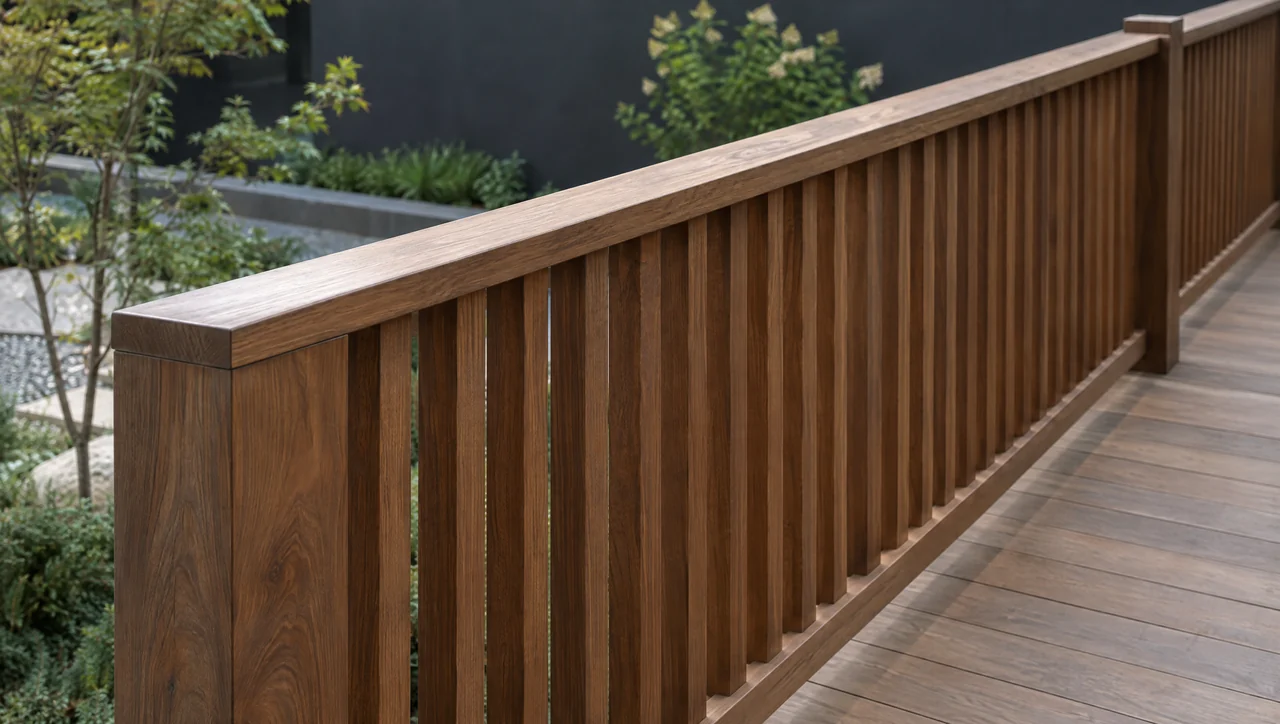
Open a guide below to document required function, its evidence and unresolved decisions.
Hardwood guards, handrails and decorative caps explained
Name the function before selecting the hardwood component.
Mapping a hardwood railing assembly and its connections
The hardwood is one part of a connected system.

Review the handrail with the hand in mind
Profile appearance is only part of a usable rail.

Hardwood railing cap details: joints, edges and attachment
A cap changes appearance and interfaces; it does not erase system limits.

Adding or replacing hardwood on an existing railing
Start with what is there, not only what the new surface should look like.
Trace the post into the supporting structure
A visible bracket is only one segment of the connection path.
Choose a finish for a high-touch surface
Look, feel and care should be reviewed on the actual proposed combination.
Keep the railing record useful after installation
A future repair should not start by guessing what was installed.