Record the actual substrate
Distinguish a finish board, rim, joist, slab and other support conditions. Locate the post on a plan and section. Keep anchor identity and supporting substrate documentation together.
Ask for a matched detail
Identify the responsible designer or system supplier and obtain the connection detail that applies to the location. Do not select a connection by copying a photograph or substituting a stronger-sounding wood species.
Identify what is behind the visible fixing
A photograph of a post base often shows the least important part of the question: the exposed metal. The reviewer also needs to know what the fixing engages, how that member connects to the rest of the structure, and whether the installed condition matches the proposed detail. A finish board and the framing beneath it are different layers.
Give every post location a reference on the plan. Record the substrate description from available drawings or qualified inspection. When it is concealed or unknown, write that explicitly. Do not choose a longer screw to compensate for not knowing what is behind the surface.
A useful connection request has a location and a question
| Weak request | Useful request |
|---|---|
| What screw should I use? | Post P3: identify the approved connection for the documented supporting member. |
| This bracket looks strong enough. | Confirm the bracket model, fasteners and supporting conditions covered by its documentation. |
| The new wood is stronger. | Review the complete proposed substitution, including member dimensions and connections. |
| Use the same detail everywhere. | Compare corner, stair and straight-run locations before assigning a detail. |
In a fictional replacement project, two posts have the same visible size. One sits beside a framing joint and the other beside an uninterrupted member. The survey gives them different location references so the designer can resolve each condition. The material list can share a wood description without pretending the attachment details are identical.
Close the handoff with the accepted detail
Keep the review response beside the drawing it answers. Record its revision, any conditions and the person responsible for resolving the remaining questions. If the field condition differs when work begins, stop using the earlier answer as if nothing changed.
The handoff is complete when the installer can identify the location, required components, relevant detail and unresolved hold points. It is not complete merely because a folder contains a connector brochure. Preserve photographs of accessible work and any approved changes for the owner record.
A railing interface under review
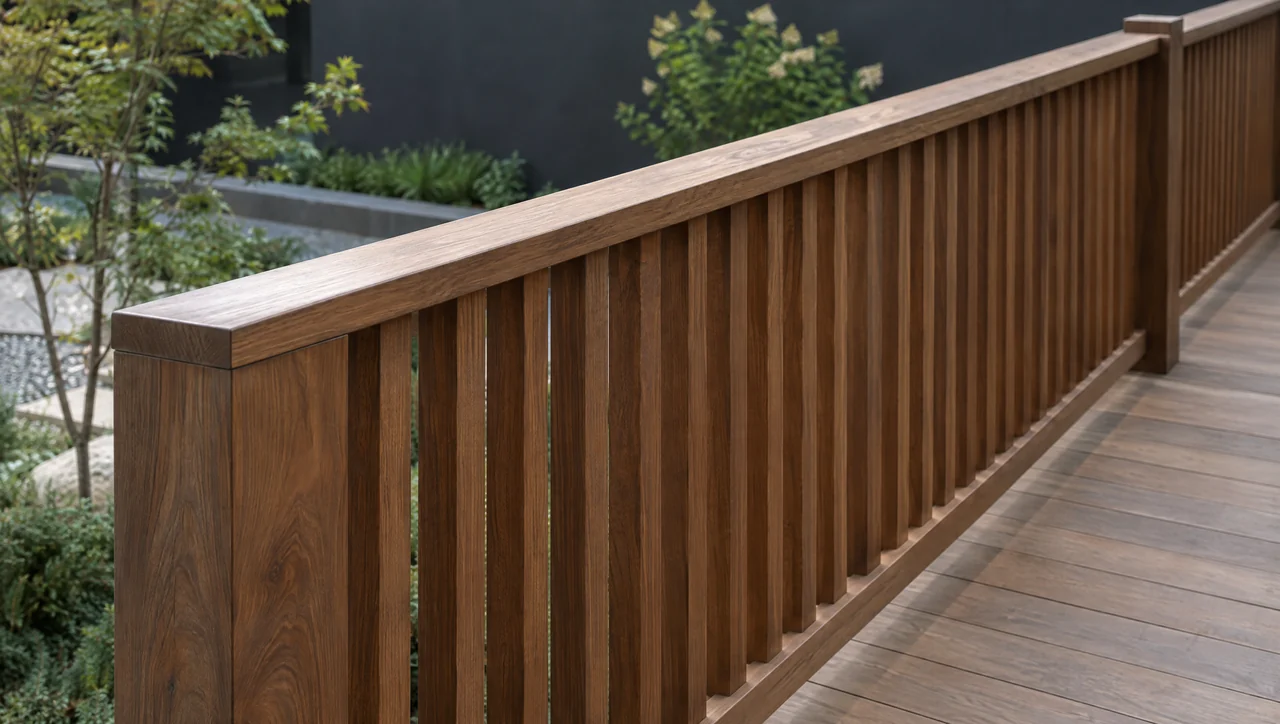
Two posts look identical above a deck, but one aligns with a rim and the other with a different framing condition. Their documentation needs to resolve those different supports.
Hypothetical planning example.
Technical context
AWC DCA 6 illustrates different guard-post attachment situations within a limited residential wood-deck scope. It is not a generic hardwood connection approval.
AWC: DCA 6 residential deck guide (2015 IRC basis)